Make a meal plan based on your macros, a full week at a time.
Your training week of meals, planned. Every portion sized. One grocery list.
Mero sets your calorie and macro targets from your profile and goal, then plans every meal around your training. More carbs on hard days. Less on rest days. Next week’s draft is ready every Friday at 8 a.m. Weigh in and check off your meals, and Mero moves next week’s calorie target toward your goal.

5.0 on the App Store14 days free, then $9.99/month
“My macros are dialed. I still ended Wednesday at the drive-through because I didn’t prep Sunday.”
Macro math is the easy part. Running 21 meals through a week with three hard days, two easy, one rest and one long is where plans fall apart. The hard part isn’t knowing the numbers. It’s knowing what to buy, what to cook, when, and what to eat when Tuesday runs late.
A real week, built from one set of macros.
This is a week Mero planned for a sample profile: 185 lb, maintaining weight, moderate activity, three hard days, two easy and two rest. Protein stays put. Carbs follow the training.
| Day | Meals | Calories | Protein / carbs / fat |
|---|---|---|---|
| MonHard, early morning |
| 2,901 | 188 / 396 / 59 |
| TueEasy, evening |
| 2,184 | 168 / 247 / 58 |
| WedRest |
| 2,173 | 169 / 249 / 57 |
| ThuHard, evening |
| 2,934 | 177 / 420 / 58 |
| FriEasy, morning |
| 2,188 | 168 / 243 / 58 |
| SatHard, morning |
| 2,865 | 172 / 420 / 59 |
| SunRest |
| 2,605 | 168 / 350 / 60 |


- Same lunch, different portion. The Chicken Burrito Bowls come to 989 kcal on hard Monday and 726 on easy Tuesday. Mero sizes each portion to the day.
- Sunday is a rest day with extra carbs. Next Monday’s session is early, so Mero moves part of that fuel to Sunday evening.
- Two batch cooks cover ten meals. The breakfast bowls and burrito bowls are prepped once for Monday to Friday. One grocery list covers the whole week.
- Monday runs a little high on protein. Its dinner was swapped by hand in the app, and the swap kept the rest of the week as planned.
Need your own numbers first? Start with the training day macro calculator.
How to make a meal plan based on your macros
The manual way takes four steps. Mero does all four for you, and redoes them every week.
- Set your targets.Calories from your body, activity and goal, then protein, fat and carbs. The free macro calculator gives you a starting point.
- Match targets to training.Hard days need more carbs than rest days. One flat number every day misses that.
- Assign and size the meals.Pick meals for every slot and size each portion so the day adds up to its targets.
- Turn it into a shop and a prep plan.Combine the ingredients into one grocery list, then batch what preps well.
How Mero builds the numbers is on the methodology page.
Plan, grocery, prep, today, next week.
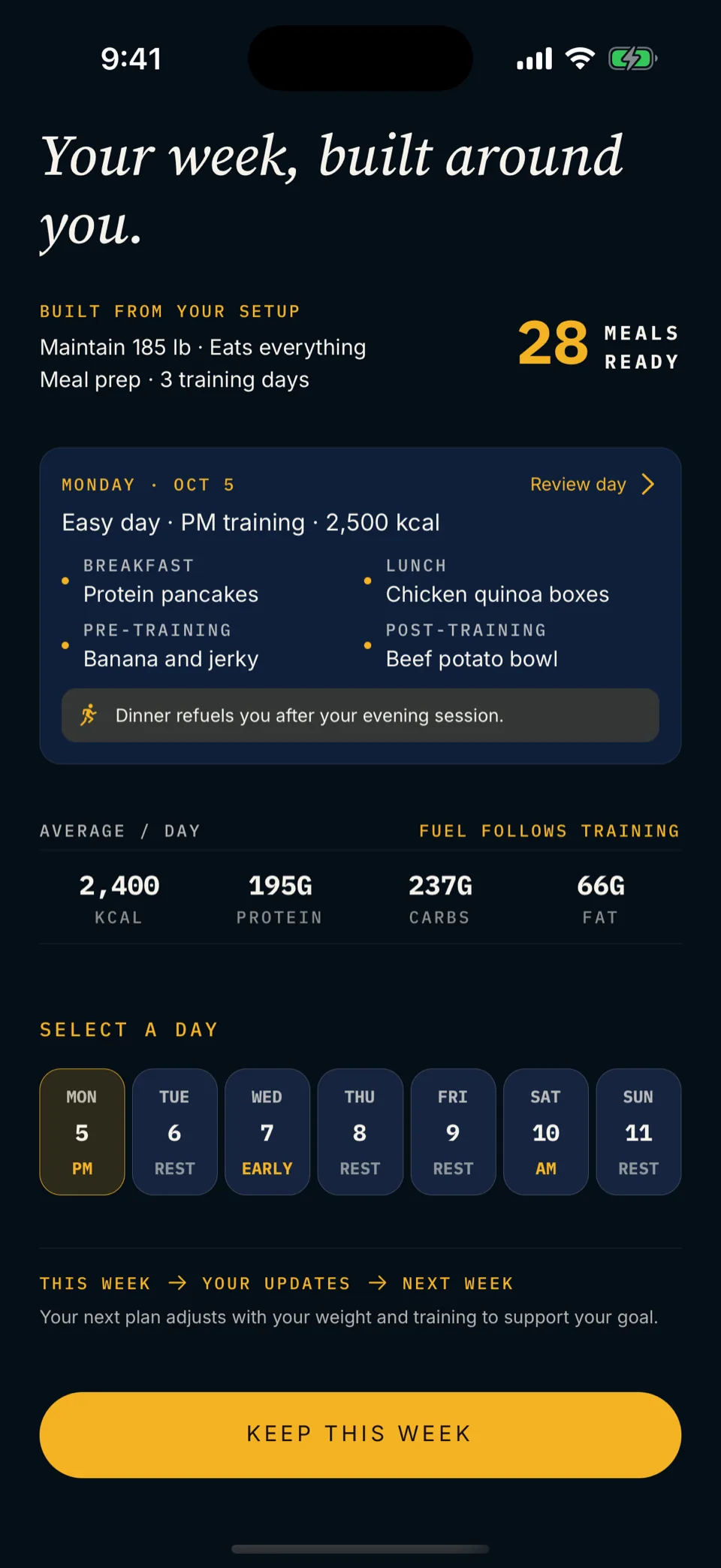
A week of meals built from your macros.
Seven days of meals built from the targets Mero sets and your training calendar. More carbs on hard days. Pre- and post-training meals around the session. Less on rest days.
A macro meal planner with the grocery list built in.
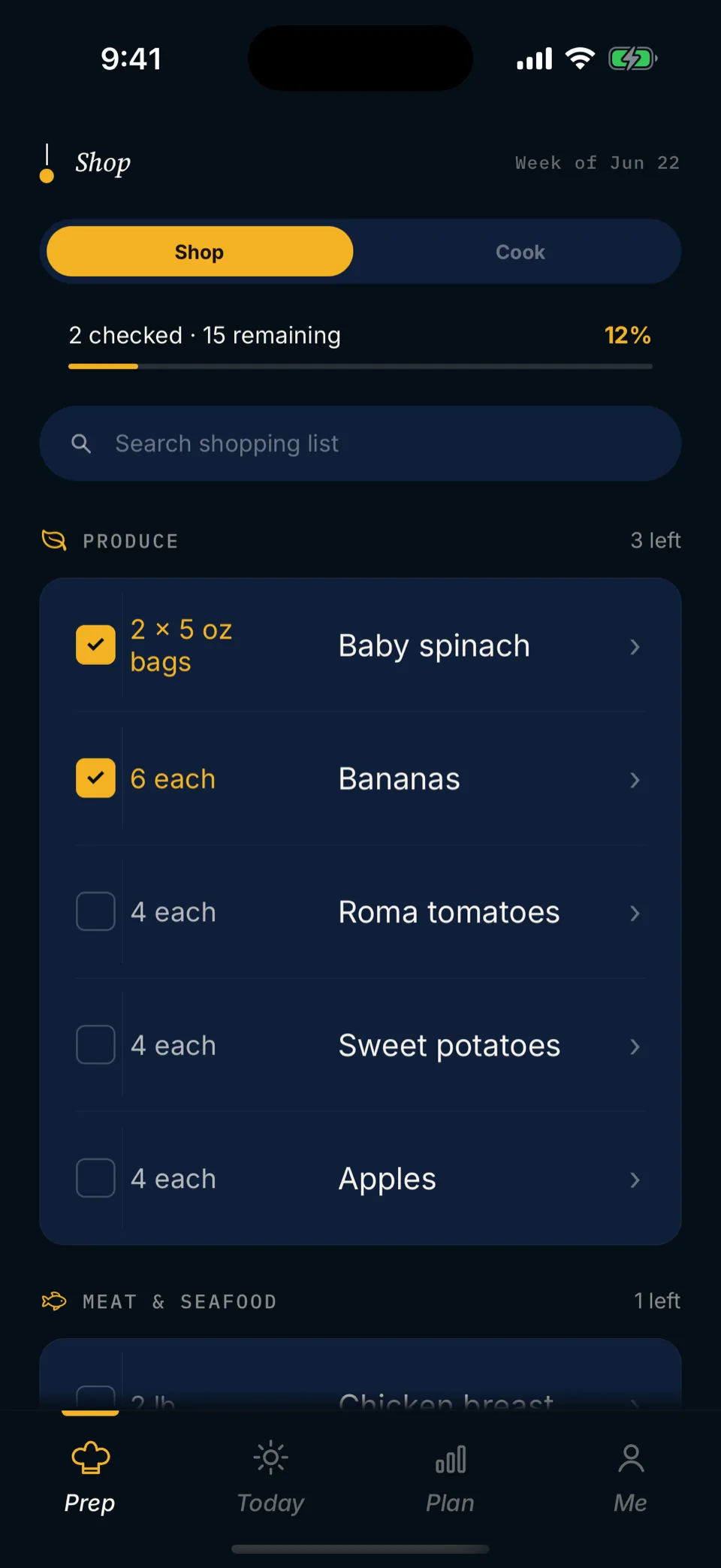
One grocery list, straight from the plan. Grouped by aisle. Quantities combined across recipes, so you buy one bag of spinach, not three half-bags.
A prep plan from the same shop.
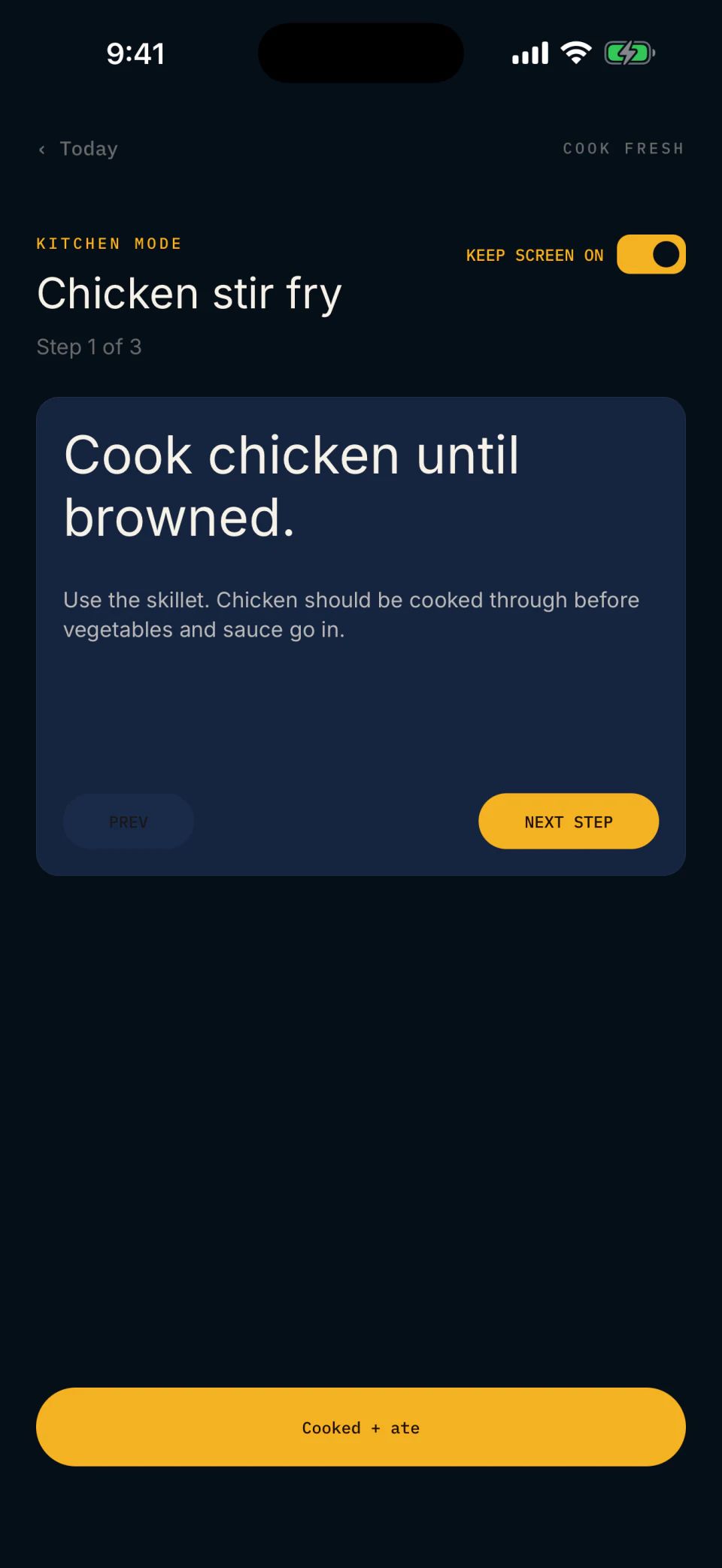
One batch-prep plan for every meal that batches well. Kitchen Mode walks you through it, one step at a time. Prep any day you like. Single-serve meals stay on the daily list.
Meals and training in one timeline.
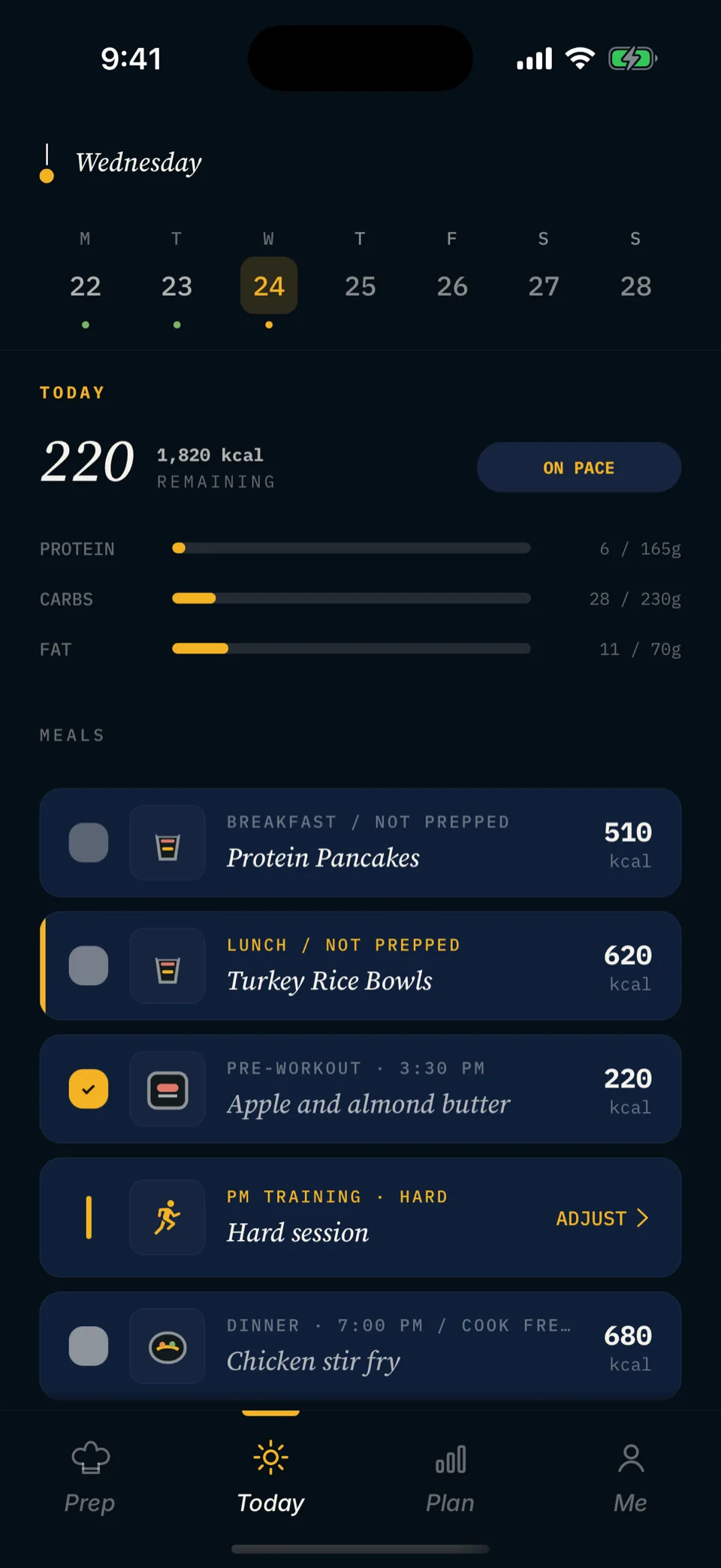
Your day as a checklist. Tap each meal as you eat it. See where you stand against the day’s targets. No barcode hunt. No blank food diary.
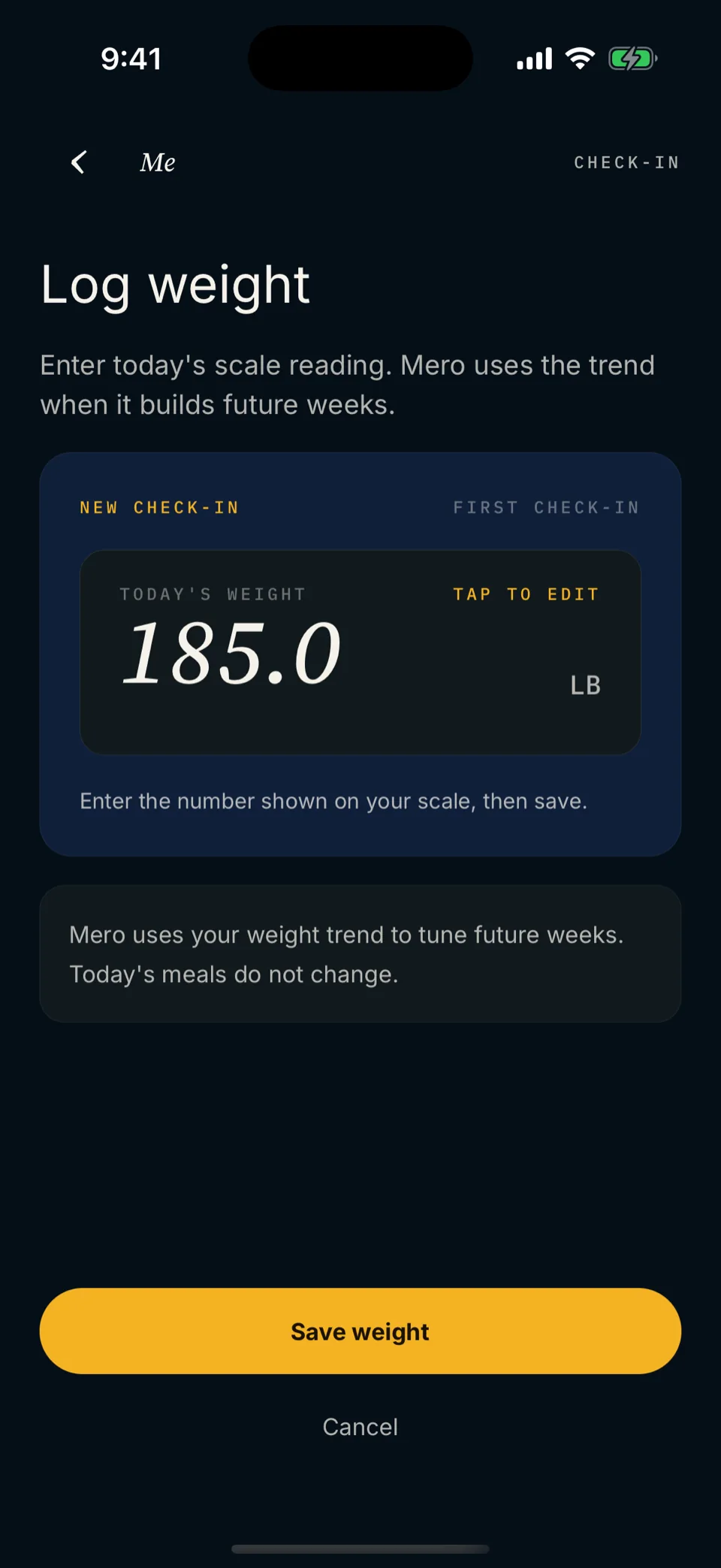
Next week adjusts to your progress.
Next week’s draft is ready Friday at 8 a.m. your time, built from your profile, your training week and a 28-day meal rotation. The week you accepted stays put. Weigh in and check off your meals, and Mero moves next week’s calorie target toward your goal.
People who train on a real schedule and want a week that holds.
- People who don’t want to do macro math.Mero sets your targets from your profile and goal, then does the meal-by-meal math. The training week is the unit.
- Busy professionals who train.You don’t have an hour each evening to figure out dinner. You want the week decided before it starts.
- Batch preppers.You already prep. You want the plan, the grocery list and the batch-prep plan done for you, not rebuilt every weekend.
- People who’ve outgrown a tracker.Logging after the fact tells you what happened. A planner decides what happens before the week starts.
A tracker tells you what happened. A planner tells you what to do.
A tracker is good at logging. A planner decides the week up front, so the daily work is checking off meals you already chose.
A macro tracker
- Tells you what you ate after the meal.
- Starts from zero every morning.
- Leaves planning, shopping, and prep to you.
- Optimizes for the moment, not the week.
A macro planner (Mero)
- Tells you what to eat before the week starts.
- Builds next week’s draft from your current profile and training week.
- Generates one grocery list and a batch-prep plan.
- Plans around your training, not a flat daily target.
Questions about the planner.
What does a macro meal planner do that a macro tracker doesn’t?
A tracker records what you ate. A planner decides the week before it starts: meals matched to your targets and your training, one grocery list, a batch-prep plan, and a daily checklist. The week is the unit, not the meal.
How does the plan adjust for hard training days versus rest days?
Carbs follow your training calendar. Hard days get the most. Easy days get less. Rest days get the least. Pre- and post-training meals land around the session. No two day types look the same.
Does it work if I want to lose, maintain, or gain?
Yes. Pick your goal at setup and Mero sets the targets for it. Change your goal and next week’s draft uses the new targets. A week you already accepted stays as it is.
Do I have to log everything I eat?
No. You check off planned meals as you eat them. Nothing to search. Nothing to log.
What happens if my training schedule changes mid-week?
Move the session in Mero. Your meals, targets, prep and grocery list stay put. If the session lands on a new day, Today shows a small carb top-up you already bought in the weekly shop. Up to 3 a week.
How is the batch-prep plan generated?
From your accepted plan and your prep-ahead or cook-fresh choice for each meal slot. Mero groups the meals that batch well into one batch-prep plan of reviewed recipes, with step-by-step Kitchen Mode. Prep any day you like. Single-serve meals stay on the daily checklist.
Can I bring in my own recipes?
No. Mero plans from its own library of reviewed recipes and sizes every portion to your targets.
How much does a dietitian charge for a meal plan?
Three US practices we checked on October 15, 2026 charged $180 to $219 a month to write a weekly plan. Mero is $9.99 a month. Mero is software, not a dietitian. See how we compared prices.
More general questions? See the main FAQ on the Mero homepage. Coming from a tracker? See the MyFitnessPal alternative for athletes.
From people using it.
5.0 on the App StoreMero does all the hard work for me. It plans my meals and grocery list around a workout plan that’s specific to me and my fitness goals. … Now it’s time to shop, prep, and shred.

Knowing my targets was the easy step. The hard part was living them week to week. I built Mero to do that part.
Plan the week around your training.
14 days free for eligible new subscribers, then $9.99/month. iPhone in the U.S. For adults 18 and over.