A MyFitnessPal alternative that plans your meals instead of logging them.
Plan the week. Don’t log it.
Mero sets your macros and plans your week around your training: every meal, one grocery list, a batch-prep plan and a daily checklist. Decided up front, not reconstructed after dinner.

5.0 on the App Store14 days free, then $9.99/month
“MyFitnessPal tells me what I ate. I don’t need a record. I need a plan.”
Diary apps are for logging: a barcode database, a long search field, a calorie count for the day. Great for recording what happened. They don’t decide what you eat: which meal, in what order, around which training day, with what bought and prepped ahead.
MyFitnessPal vs Mero, row by row.
Straight answer: MyFitnessPal Premium+ can build a meal plan and a grocery list now. If you want a food diary with a plan bolted on, that’s a fair choice. If you train on a schedule and want the week planned around your sessions, that’s the gap Mero fills.
| What you need | MyFitnessPal | Mero |
|---|---|---|
| A weekly meal plan | Yes, on Premium+. The Meal Planner builds plans of 2 to 15 days, on iOS and Android, not on the website. [1] [2] | Yes. A full training week, every meal and portion. |
| A grocery list from the plan | Yes, on Premium+, with delivery or pickup services that vary by location and platform. [1] [4] [2] | Yes. One list for the week, by store section, with package counts. |
| Different targets on different days | Yes, on Premium and Premium+, set by day of the week. [1] [3] | Yes, set by training day type: hard, easy and rest. |
| Plan built around your training sessions | Not described in the support pages we reviewed. [2] [3] | Yes. Hard days get more fuel, rest days less, and moving a session keeps your meals in place. |
| Food diary and barcode logging | Yes. This is what MyFitnessPal is built around. | No. Mero doesn’t log food. You check off planned meals. |
Decided up front. Tapped as you go.
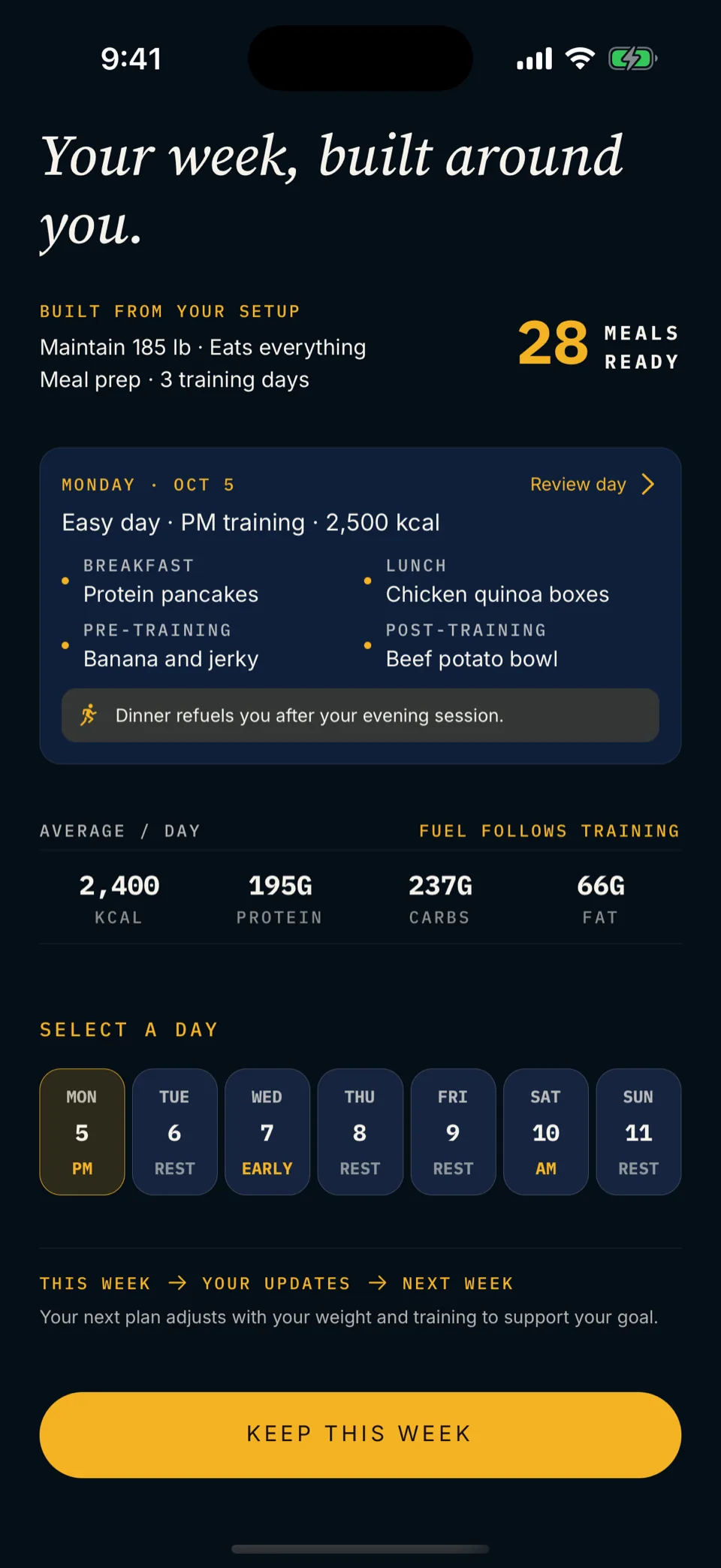
Plan.
The week decided up front from your macro targets and training schedule. Nothing to log after the fact.
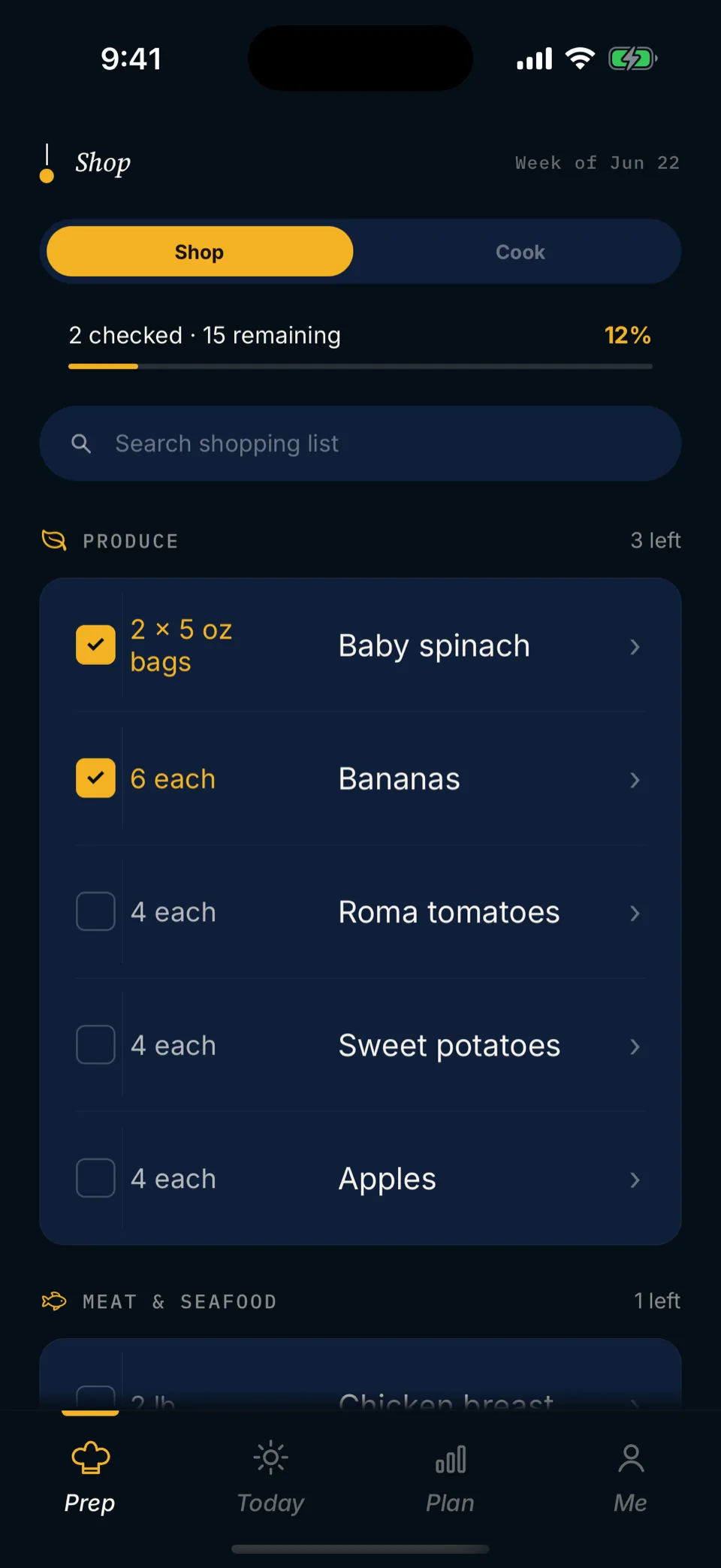
Grocery.
Generated from the plan. Aisle-grouped. Reconciled across recipes. Not assembled by hand on Saturday morning.
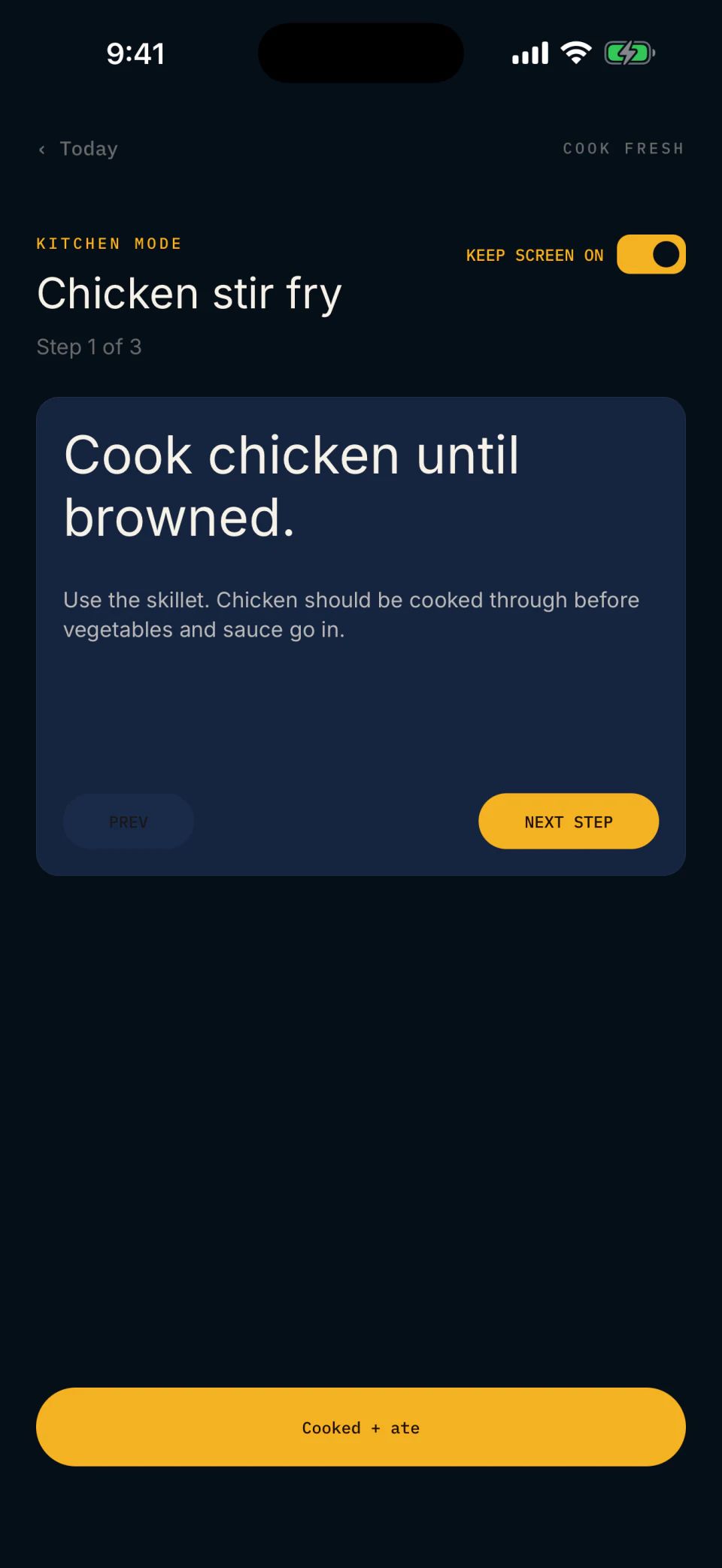
Prep.
One batch-prep plan turns the plan into food, any day you like. Meals that batch well go together. Single-serve meals stay daily.
Today.
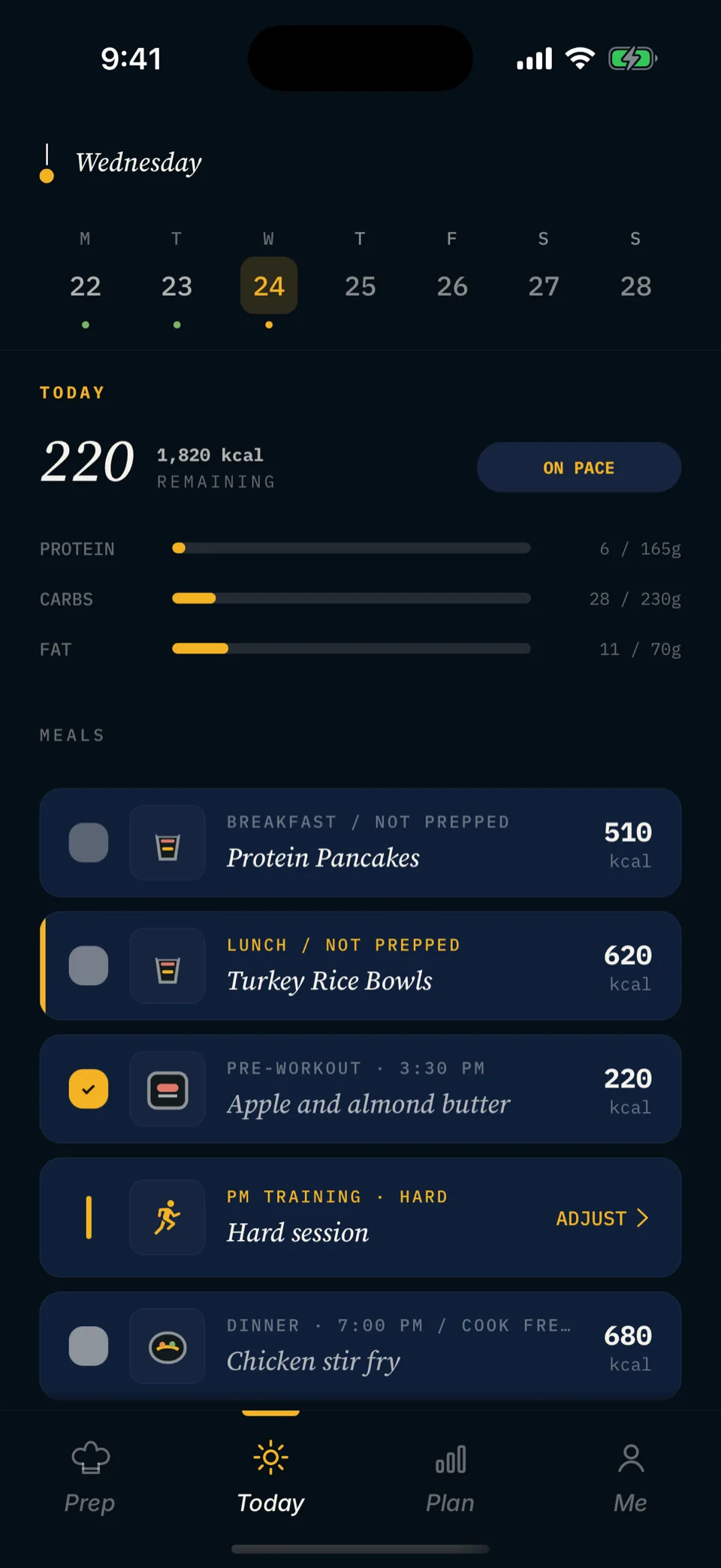
Tap planned meals as you eat. Daily macros add up as a side-effect, not as the goal of opening the app.
Tune.
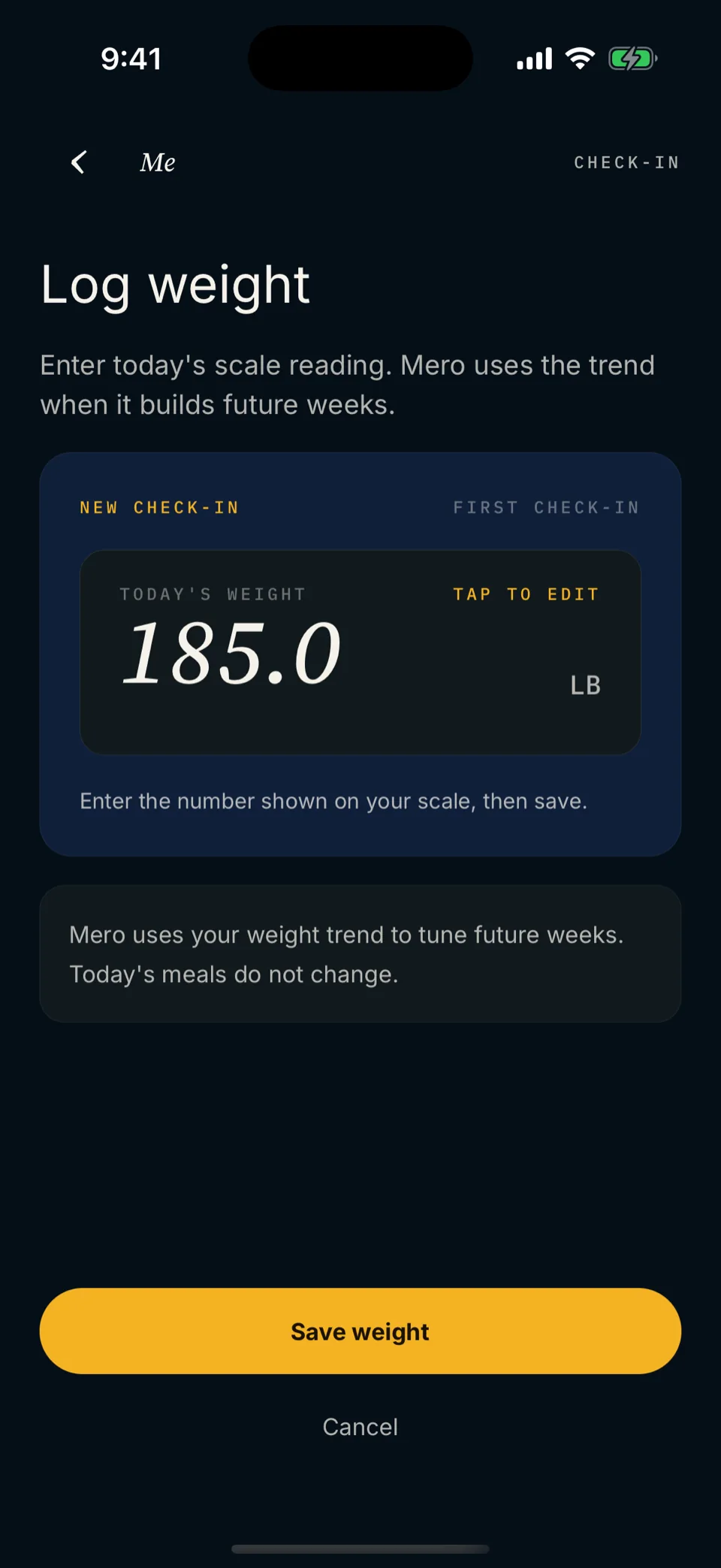
Check off meals and weigh in. Every Friday, Mero moves next week’s calorie target toward your goal.
People who understand macros and want execution.
- People who’ve maxed out the tracker workflow.Logging is keeping you honest, but it’s not telling you what to do next.
- Sunday meal-preppers tired of starting from scratch.You want the plan, the grocery list, and the prep workflow rolled in.
- People with a real training week.Hard days, easy days, rest days. Your food has to match.
- Anyone who finds logging-after-the-fact more annoying than useful.You want the decisions made up front.
Planning-first, not barcode-first.
Mero plans from its own library of reviewed recipes, every portion sized to your targets. No giant food database to search after the fact. Your daily totals add up as you check off the plan.
Switching from a tracker.
Does MyFitnessPal have a meal planner now?
Yes. MyFitnessPal Premium+ includes a Meal Planner that builds plans of 2 to 15 days with a grocery list, on iOS and Android. Its support pages, checked October 22, 2026, don’t describe plans built around your training sessions. That’s the part Mero does.
Does Mero do barcode scanning?
No. You tap planned meals. There’s nothing to scan, because the week is decided up front.
Can I still see macro totals for the day?
Yes. Today shows where you stand against the day’s targets every time you tap a meal.
Will my custom foods or recipes import from MyFitnessPal?
No. Mero plans from its own library of reviewed recipes and sizes every portion to your targets.
Can I log a meal that was not in the plan?
No. You mark planned meals done or skipped. Mero isn’t a food log, so there’s no free-form entry.
Why a planner instead of a tracker if I’m already tracking?
If tracking works for you, keep it. Mero is for people who train and want the week decided before it starts: training, groceries, prep, every meal. Not reconstructed after dinner.
Does the plan respect dietary preferences and allergies?
Allergies, yes. Mero plans around every allergy you select at setup, plus your goal and training. Vegetarian and medical diets, no. Every week is omnivore.
Which platforms are supported?
iPhone, in the U.S. Android is in closed testing.
Is Mero free?
No. Mero is 14 days free for eligible new subscribers, then $9.99/month through the App Store. You see your first day’s meals and every day’s targets before the trial starts.
More general questions? See the main FAQ on the Mero homepage, or the training meal plan app page for training-specific questions.
From people using it.
5.0 on the App StoreMero does all the hard work for me. It plans my meals and grocery list around a workout plan that’s specific to me and my fitness goals. … Now it’s time to shop, prep, and shred.

Knowing my targets was the easy step. The hard part was living them week to week. I built Mero to do that part.
Trade logging for a plan.
14 days free for eligible new subscribers, then $9.99/month. iPhone in the U.S. For adults 18 and over.